
Finding the right RV insurance coverage can feel confusing. Many people buy RVs for travel, adventure, or even as a full-time home, but the risks are unique. Accidents, theft, weather, and even breakdowns can lead to big repair bills. Not all auto insurance policies cover RVs properly. Some RV insurance plans offer basic protection, while others cover almost every risk you might face on the road or at a campsite. Comparing different types of coverage and insurance providers is the smartest way to protect your investment—and your peace of mind.
This guide will help you understand RV insurance coverage, compare the main options, see what really matters, and avoid common mistakes. Whether you’re a weekend traveler or a full-time RVer, you’ll find practical advice that can save you money and trouble.
What Is Rv Insurance?
RV insurance is a special type of policy designed to cover recreational vehicles like motorhomes, travel trailers, fifth wheels, and camper vans. RVs are bigger, more expensive, and used differently than regular cars. That’s why they need more than standard auto insurance. RV insurance protects against damage to the vehicle, accidents, injuries, theft, and even loss of personal belongings inside the RV.
Types Of Rvs And How They Affect Insurance
Insurance costs and coverage options depend a lot on the type of RV you own. Here’s a quick look at the main types and their differences.
| RV Type | Class/Description | Typical Insurance Needs |
|---|---|---|
| Class A Motorhome | Large bus-like RV | High coverage, more liability |
| Class B Motorhome | Camper van | Moderate coverage |
| Class C Motorhome | Truck chassis with cab | Similar to Class B, but may need more coverage |
| Travel Trailer/Fifth Wheel | Towed RV (not driven) | Storage and contents coverage |
| Pop-up Camper/Truck Camper | Small, collapsible or truck bed | Basic coverage, optional extras |
Larger and more expensive RVs usually cost more to insure. Motorhomes need both auto and RV coverage, while towed trailers might not need as much liability protection.
Core Rv Insurance Coverages Explained
RV insurance isn’t just one thing. It’s a bundle of protections. Here’s what you’ll find in most policies:
- Liability Coverage: Pays for injuries or property damage you cause to others in an accident.
- Collision Coverage: Pays to repair or replace your RV if you hit something.
- Comprehensive Coverage: Covers non-collision events, like theft, fire, vandalism, or storms.
- Uninsured/Underinsured Motorist: Helps if you’re hit by someone with little or no insurance.
- Medical Payments (MedPay): Pays for medical costs if you or your passengers are hurt, no matter who was at fault.
- Personal Belongings Coverage: Protects items inside the RV, like laptops, clothes, or camping gear.
- Roadside Assistance: Helps with towing, battery jumps, flat tires, or lockouts.
- Vacation Liability: Extra protection when your RV is parked and used as a residence at a campsite.
- Full-Timer Coverage: For RVers who use their vehicle as a primary home, similar to homeowners insurance.
- Emergency Expense: Pays for lodging or travel if your RV breaks down far from home.
Not all companies include every coverage in their standard policy. Some offer them as optional add-ons.
Comparing Top Rv Insurance Providers
Many insurance companies sell RV insurance, but coverage and price vary widely. Here’s a look at how the most popular providers compare.
| Provider | Strengths | Possible Weaknesses |
|---|---|---|
| Progressive | Customizable coverages, accident forgiveness | Some discounts require bundling |
| GEICO | Low rates, mobile app, easy claims | Limited full-timer coverage |
| Good Sam | Specializes in RVs, full-timer options | Fewer local agents |
| Nationwide | Strong roadside assistance, vanishing deductible | Can be pricier for older RVs |
| State Farm | Large agent network, great customer service | Fewer discounts for RV insurance |
Always get quotes from at least three companies. Rates can be hundreds of dollars apart for the same RV and coverage.
How Much Does Rv Insurance Cost?
The price of RV insurance depends on:
- Type of RV (motorhome vs. trailer)
- Value and age of the RV
- How often you use it (weekends or full-time)
- Driving history and location
- Chosen coverages and deductibles
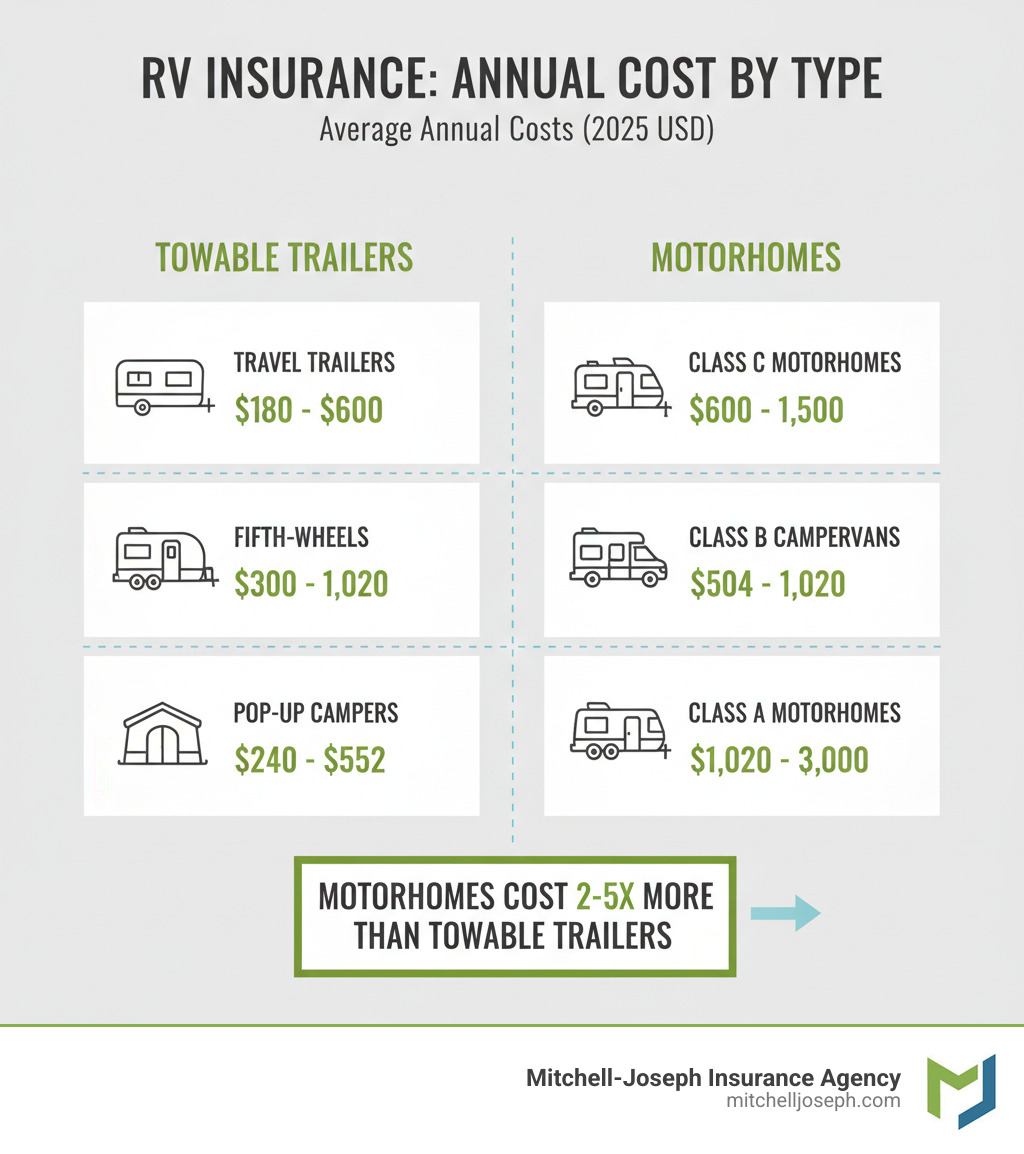
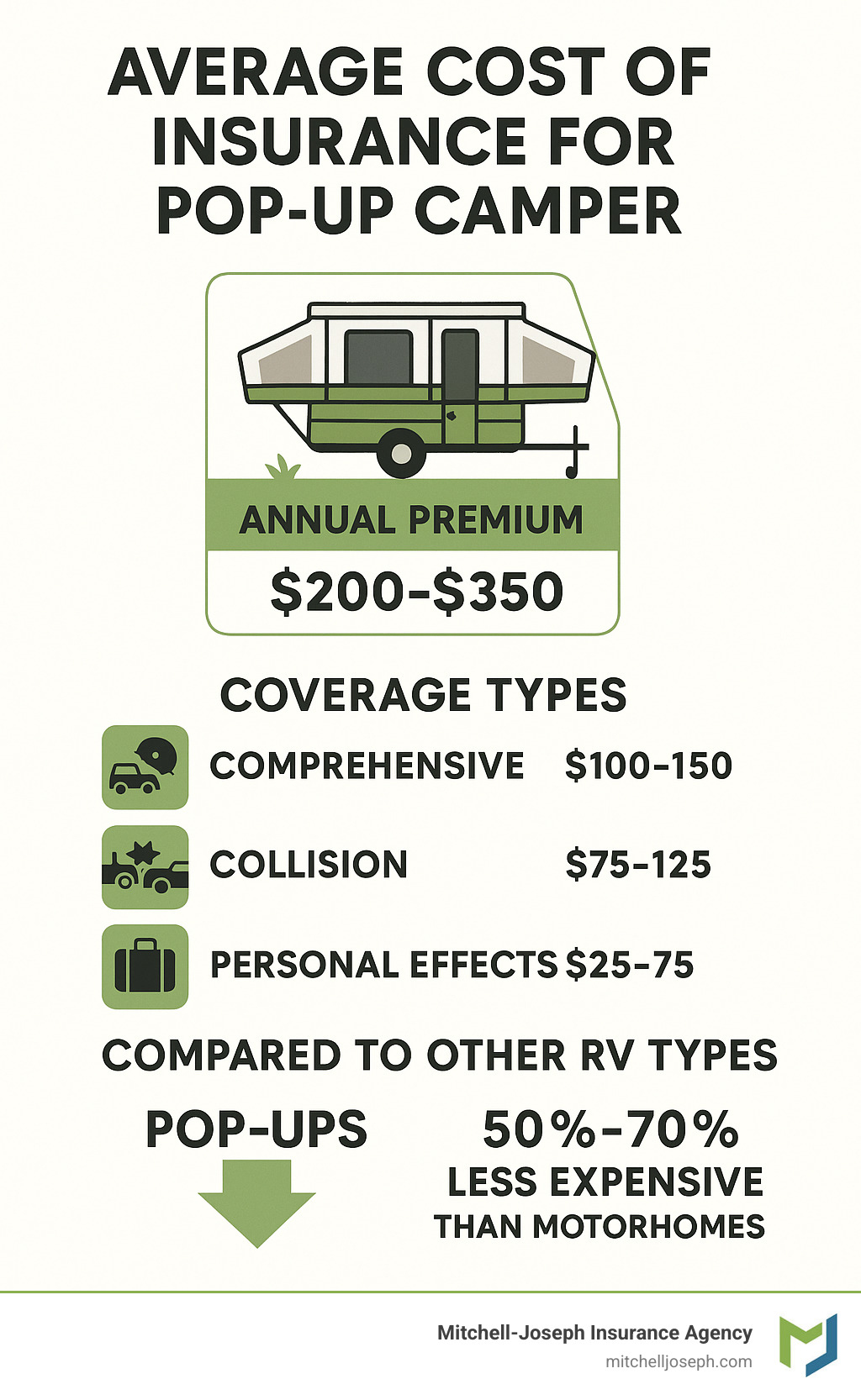
A typical Class A motorhome can cost $1,000–$2,000 per year for full coverage. Smaller trailers or pop-ups might be $200–$500 yearly. Full-timer policies are usually more expensive, sometimes over $2,500 per year, because they act more like a homeowner’s policy.
Rv Insurance Coverage Comparison: What Matters Most
Not all coverage is equal. Here’s how to compare the most important features:
Physical Damage Coverage
Some policies cover the actual cash value (what your RV is worth now), while others offer agreed value or replacement cost (paying for a new, similar RV if yours is totaled). Replacement cost is better but costs more.
Personal Belongings
Coverage limits for items inside your RV can range from $1,000 to over $10,000. If you travel with expensive gear or electronics, you may need extra protection.
Roadside Assistance
Not all roadside plans cover large RVs or towing long distances. Look for plans with unlimited towing and 24/7 service.
Vacation Liability
This adds liability protection when your RV is parked as a residence. It’s important for long stays or full-timers.
Full-timer Vs. Occasional Use
If you live in your RV more than 6 months a year, you need full-timer coverage. Regular policies might not pay for accidents at your campsite or injuries inside the RV.
Deductibles And Limits
Higher deductibles lower your premium but cost more if you file a claim. Make sure your liability limits are high enough—$100,000 is usually the minimum, but many choose $300,000 or more.
Discounts
Many companies offer discounts for:
- Bundling with home or auto insurance
- Safe driving history
- Anti-theft devices
- Completing RV safety courses
- Storing your RV in a secure location
Ask about every possible discount. Some are not advertised.
Common Mistakes When Buying Rv Insurance
It’s easy to make costly mistakes when buying RV insurance. Here are problems to avoid:
- Assuming auto insurance is enough. Most car policies do not cover RV contents or offer enough liability.
- Ignoring full-timer needs. If you live in your RV, you need more than a basic policy.
- Underestimating personal belongings. Standard coverage might not protect expensive items.
- Not comparing replacement options. Actual cash value may leave you with less than you need after a total loss.
- Skipping roadside assistance details. Some plans only tow a few miles or don’t cover large motorhomes.
- Choosing the lowest price, not the best value. Cheap policies often cut important coverage.
- Not reading the fine print. Exclusions can be hidden—always read your policy carefully.
Real-world Example: Why Coverage Details Matter
Imagine your motorhome is damaged by hail while parked at a campground. If you have only basic liability, you’ll pay for repairs yourself. If you have comprehensive coverage with a low deductible, your insurance pays most of the repair bill.
Another example: You’re traveling with $4,000 in camera gear and laptops for work. If your belongings coverage maxes out at $1,000, you could lose thousands after a theft. Always match your coverage limits to your actual risks.
When To Review And Update Your Policy
Your insurance needs can change. Review your policy:
- When you buy a new RV or upgrade equipment
- If you start living in your RV full-time
- When you travel to new states or regions
- After adding new expensive items (e.g., solar panels, electronics)
Most companies let you adjust coverage anytime. Keeping your policy up to date avoids denied claims.
Rv Insurance And The Law
Most states require at least liability coverage if your RV is motorized. Towed trailers may not need separate liability, but your auto policy might not cover everything. Some campgrounds or RV parks require proof of insurance. Check local laws before traveling.
For more details on state requirements, visit the USA.gov vehicle insurance page.
Credit: mitchelljoseph.com
Coverage Comparison: What To Look For In A Policy
Here’s a quick visual guide to help you spot differences between insurance plans:
| Coverage Feature | Basic Policy | Comprehensive Policy | Full-Timer Policy |
|---|---|---|---|
| Liability | Required minimum | High limits | High limits, year-round |
| Collision/Comprehensive | Optional | Included, low deductible | Included, low deductible |
| Personal Belongings | Low limit | High limit | High limit |
| Vacation Liability | No | Yes | Yes |
| Emergency Expenses | No | Yes | Yes |
| Roadside Assistance | Optional | Included | Included |
| Full-Timer Liability | No | No | Yes |
Two Insights Many Rv Owners Miss
- Standard auto insurance may not cover your RV when parked or used as a home. Even if your car insurance extends to a towed trailer, it often excludes theft, weather, or personal injury inside the RV.
- Policy exclusions can be hidden in the details. For example, some plans don’t cover water damage from leaks, pest infestations, or accidents in Mexico or Canada. Always ask for a sample policy and check the fine print.
Credit: blakeinsurancegroup.com
How To Get The Best Value On Rv Insurance
- Shop around every year. Rates change, and companies offer new discounts.
- Ask for declining deductibles if you’re accident-free.
- Increase your deductible only if you have savings to cover it.
- Join RV clubs for special deals or group rates.
- Keep a clean driving record—this can lower your premium by hundreds of dollars.
Frequently Asked Questions
What’s The Difference Between Rv Insurance And Auto Insurance?
Auto insurance only covers the driving risk, not the unique risks of living or vacationing in an RV. RV insurance adds protection for personal belongings, liability when parked, and special roadside assistance.
Do I Need Insurance For A Towed Travel Trailer?
Yes, but the type depends on use. Your auto policy might cover some liability, but not theft, weather, or your personal items. RV insurance is recommended for trailers, especially if you store valuables inside.
How Can I Lower My Rv Insurance Premium?
Increase your deductible, bundle policies, take an RV safety course, or store your RV securely. A clean driving record and low annual mileage can also reduce your rate.
What’s Full-timer Rv Insurance?
Full-timer coverage is for people who live in their RV more than 6 months a year. It adds liability, medical, and property protections similar to a homeowner’s policy.
Does Rv Insurance Cover International Travel?
Most US policies do not cover travel in Mexico or Canada without special add-ons. Ask your agent about international coverage before crossing borders.
RV insurance is more than just paperwork—it’s protection for your adventures, your finances, and your way of life. Take the time to compare, ask questions, and choose the right coverage for your needs. With the right policy, you can travel with confidence, knowing you’re ready for whatever the road brings.
Credit: mitchelljoseph.com
Read More:
- Mortgage Protection Insurance Policy: Essential Guide for Homeowners
- Event Liability Insurance Coverage: Protect Your Next Event Now
- Insurance Lead Generation Services: Boost Your Sales Fast
- Commercial Property Insurance Rates: What Affects Your Premiums?
- Gap Insurance for Financed Cars: Protect Your Investment Today
- Best Auto Insurance for Veterans: Top Discounts and Coverage
- Vision Insurance Plans for Families: Protect Your Loved Ones’ Sight
- Online Insurance Broker Platforms: Simplify Your Policy Search